
Hop2it Carbon Projects
Hop2it works with partners in Papua New Guinea to advance nature-based carbon opportunities through landowner engagement, project documentation, applicable approvals and independent technical processes. Explore how projects move from an identified landscape toward eligible, traceable carbon assets.
PORTFOLIO INTRODUCTION
A Portfolio Built Project by Project
Each carbon project has its own location, landowner relationships, rights, methodology, development work and approval path. Hop2it will describe projects individually, with the current stage and supporting evidence shown in each profile. Portfolio totals should reflect only projects for which Hop2it’s role and rights are documented.

CURRENT PROJECTS
Profiles supported by current documents.

PROJECT PIPELINE
Opportunities shown separately from contracted projects.

PNG OPERATIONS
Local coordination through Hop2it’s registered PNG presence.

PROJECT STATUS
Date-stamped stages and next milestones, updated as evidence changes.
PROJECT ORIGINS
From Research to Documented Project Rights
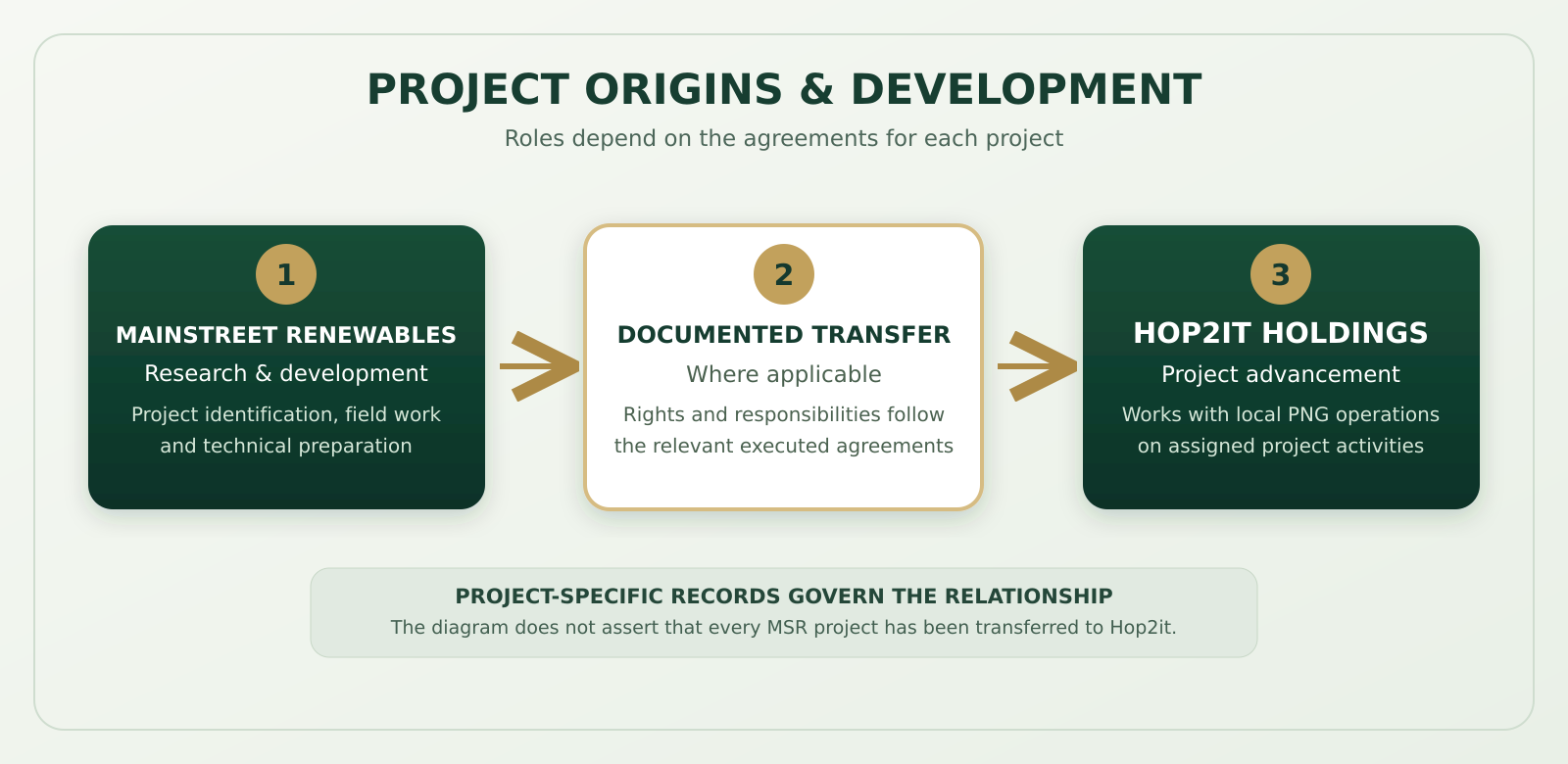
MainStreet Renewables Pte. Ltd. conducts research and develops project opportunities. Where an opportunity or associated rights are assigned to Hop2it under an applicable agreement, Hop2it progresses its defined responsibilities through the Papua New Guinea operating structure. The project profile should identify the relevant legal entity and the basis for its role.
CURRENT PROJECT PROFILES
Explore Our Carbon Projects
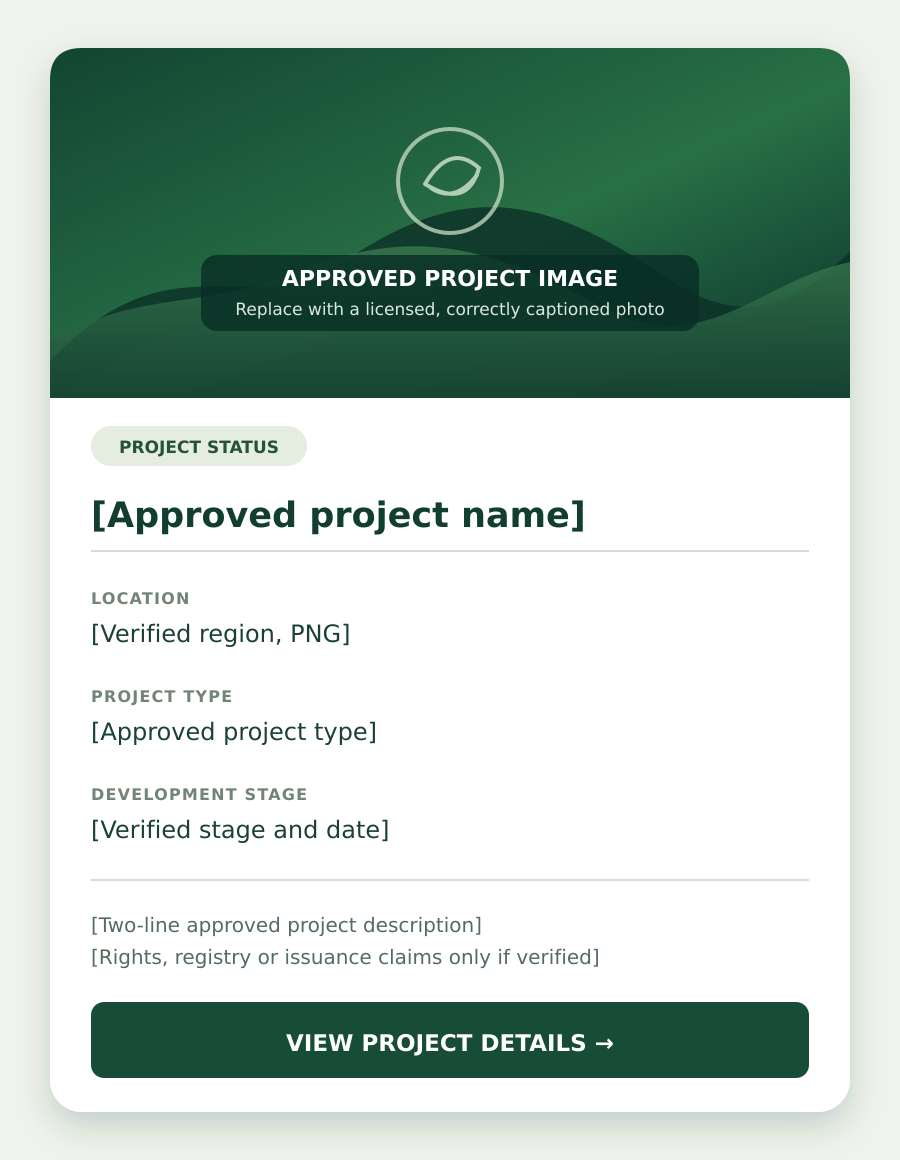
Open a project profile to review its location, forest setting, landowner engagement, the stage of technical work and the next documented steps. Project information changes as approvals, validation and registry processes progress.
PROJECT FUNDAMENTALS
What Makes a Credible Forest Carbon Project
Forest potential alone does not establish an issued carbon credit. Rights and tenure, customary-landowner participation, sovereign processes, an appropriate methodology, sound measurement and independent assessment all matter to project quality.

LAND AND TENURE
Identify boundaries and establish the basis for rights.

LANDOWNER PARTICIPATION
Document appropriate consultation and consent.

SOVEREIGN REQUIREMENTS
Follow applicable host-country processes.

SCIENCE AND MRV
Establish a defensible measurement and monitoring approach.

INDEPENDENT REVIEW
Complete required validation and verification.

REGISTRY TRACEABILITY
Track eligible issued units in the applicable registry.
PATH TO ISSUANCE
From Project Development to an Issued Credit
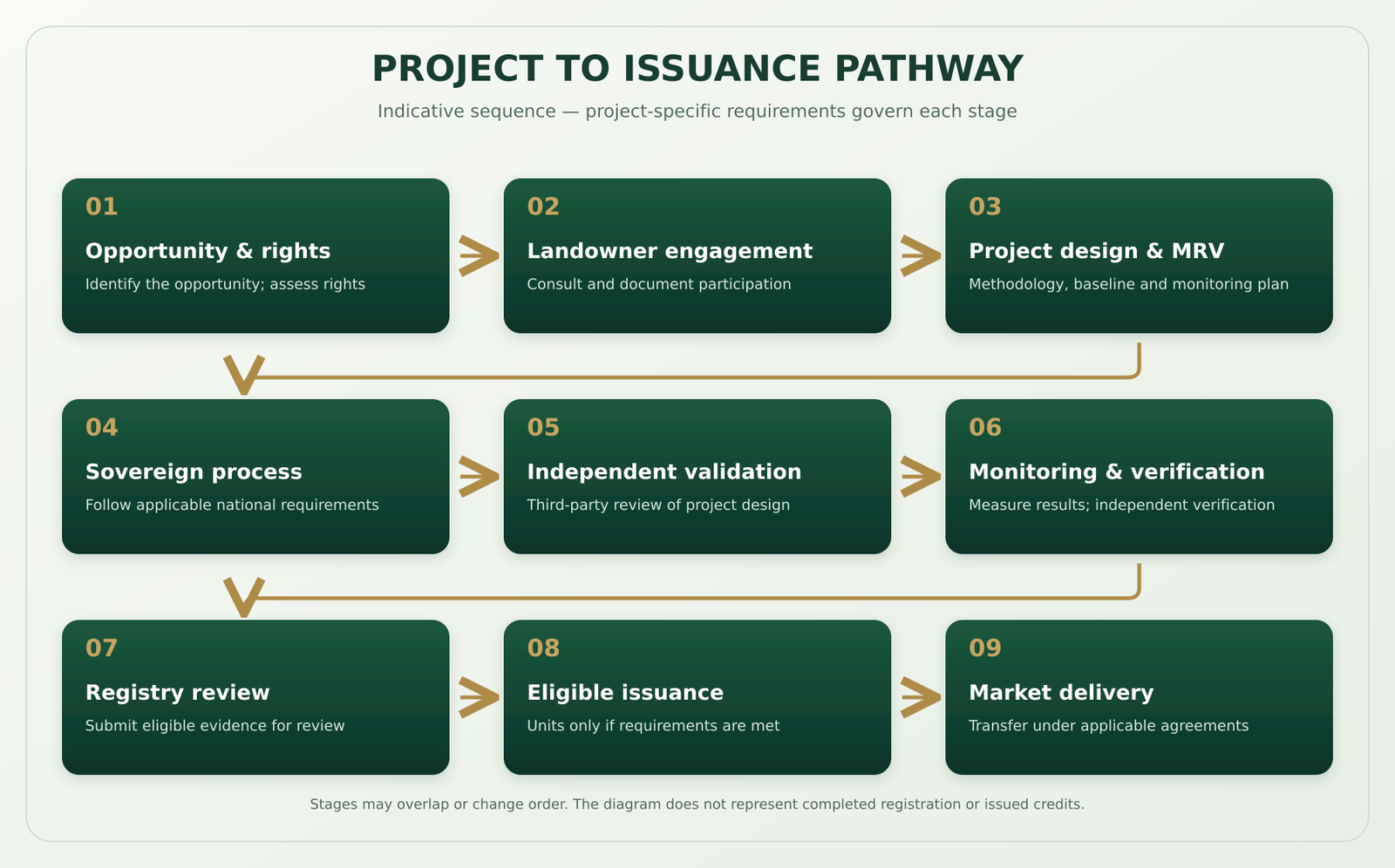
A projected carbon volume is an estimate. Issuance can be described as complete only when eligible units have passed the applicable requirements and have been issued and serialized in a registry. The project pathway must be described in the order required by the chosen framework; stages can overlap or require further work.
LANDOWNERS AND COMMUNITIES
Projects Depend on Long-Term Partnerships
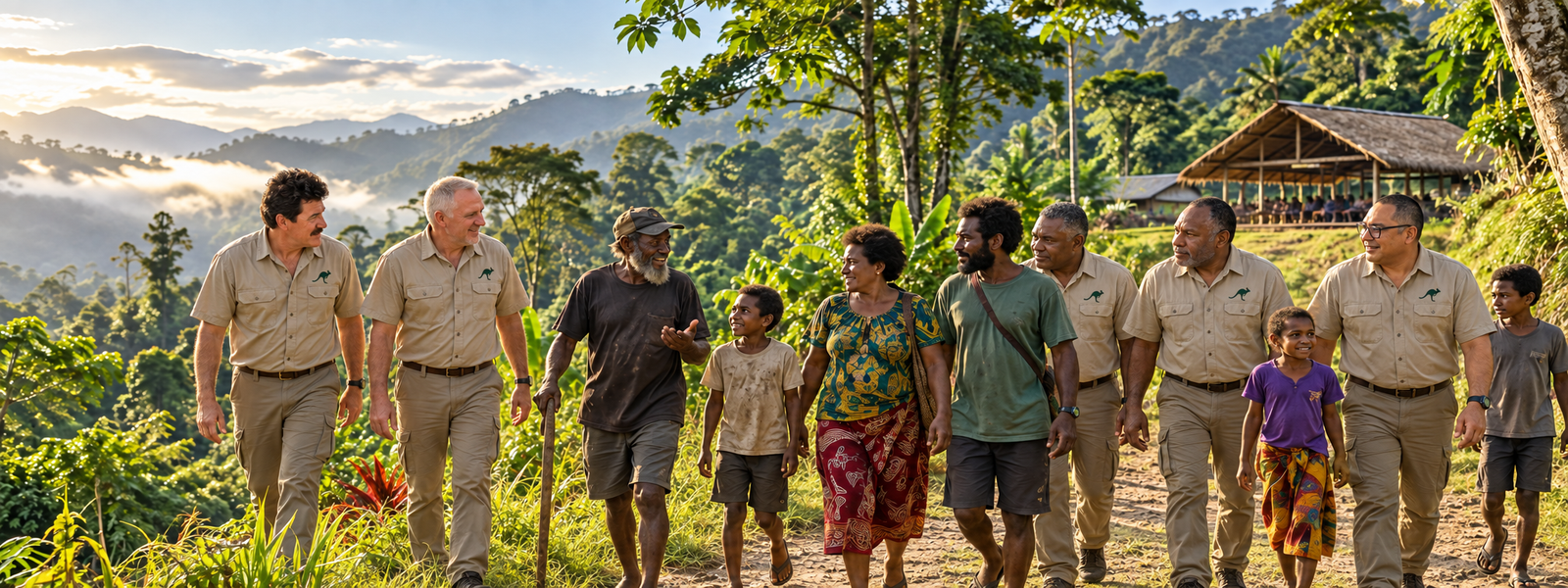
Customary landowners and communities are essential to the long-term stewardship of Papua New Guinea’s forests. Hop2it’s project work should explain how relevant parties are consulted, how participation is documented and what locally meaningful activities are undertaken at each site. Describe actual outcomes against each project’s evidence, rather than implying uniform benefits across all projects.
PARTNERS AND BUYERS
Discuss a Project or Future Supply
We welcome enquiries from customary-landowner representatives, project proponents, technical partners and prospective buyers. Project information and any discussion of future carbon supply will depend on the relevant project’s stage, contractual terms and applicable requirements.

Explore the Work Behind Each Project
Review individual projects and their development status, or contact Hop2it to discuss a potential partnership. Each profile is intended to give visitors a clearer picture of the work completed and the steps still ahead.